Archive for
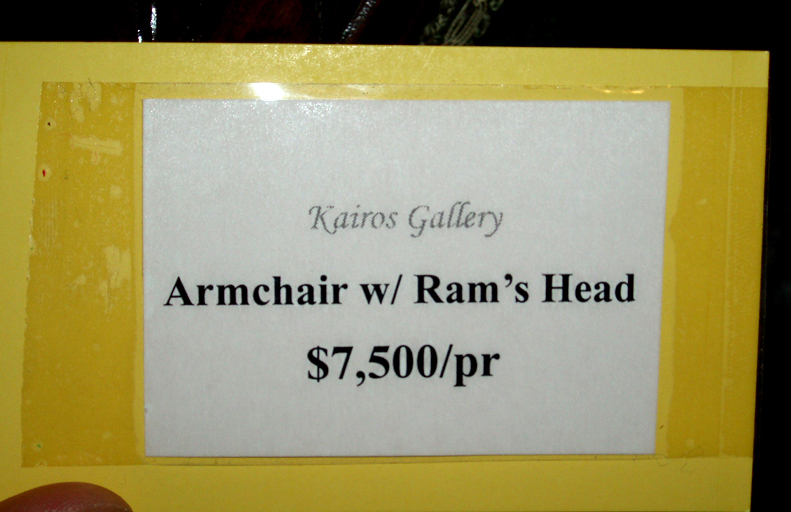
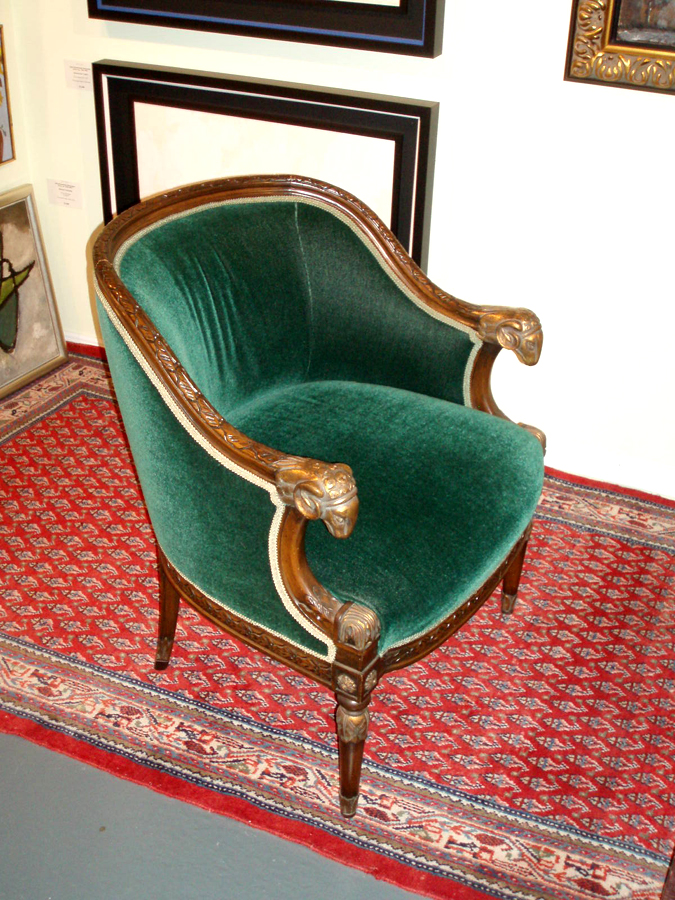
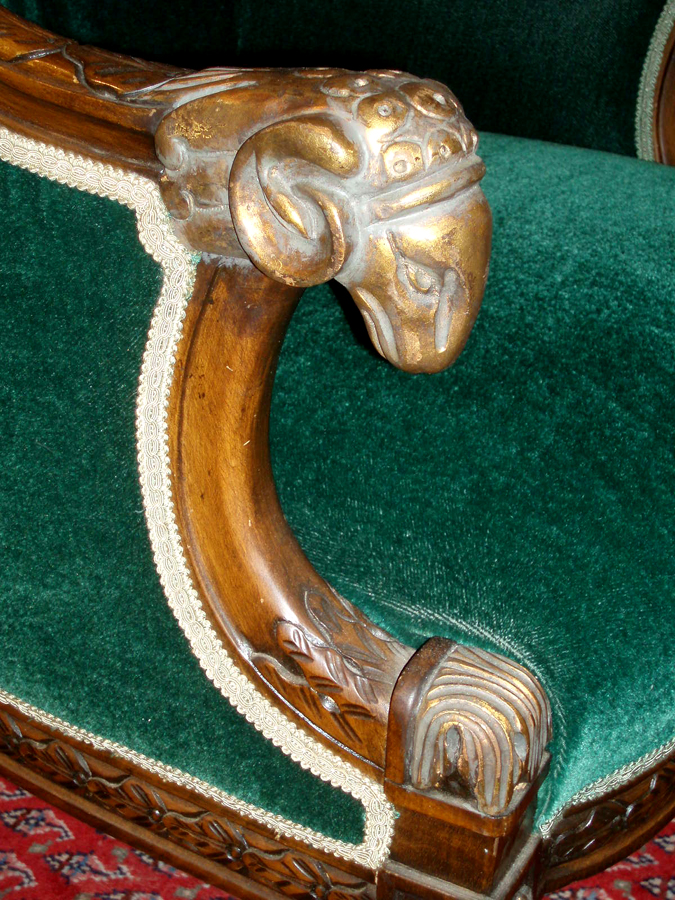
Mohair I love, but it is somewhat misspent on these chairs. The carving and the Ram’s head already gives interest which goes a long way. The heavy color and texture of the fabric really isn’t needed. A fabric in a lighter color or just in weight would give this chair a new presence. Encyclopedia Mythica tells us that the Ram is the symbol of the Egyptian god, Amun meaning the hidden one as a driving force of the invisible breeze. The original god of wind and ruler of the air; he is shown as a ram, as a man with a ram’s head or with a beard and a feathered crown. The temples dedicated to him are situated near modern day Luxor which was the inspiration, I suppose, for the Luxor Hotel.
The Egyptians seem to be have fond of the Ram as there are also several ram-gods. Cherti, the Ferryman of the Dead whose name means the lower one who had a head of a ram and a body of a man. Also, Chnum the Ram-God who made the Nile fertile.
Then there is the Greek Pelias who sent Jason to retrieve the Golden Fleece, and when Jason returned with it, he wouldn’t give up his throne, so Medea told Pelias’ daughters that she could make an old ram into a young ram. She cut up an old ram and threw them into a cauldron boiled them up and out jumped a young ram. The daughters then went into their father’s room cut him up in tiny pieces and took the pieces to Medea for boiling, which resulted in a smelly stew and that was the end of that. As my Greek Mythology Professor used to say, “Are they depraved because they are deprived or are they deprived because they are depraved?” See Encyclopedia Mythica for further details.
If for whatever reason, one wouldn’t want to reupholster these chairs, (just do it, for God sakes, they are ugly) I would at the least replace the white gimp with something that would diminish the transition from wood to fabric as the white overpowers the carving detail. Samuel & Sons for passementerie. -Center 44, NYC.
Mohair I love, but it is somewhat misspent on these chairs. The carving and the Ram’s head already gives interest which goes a long way. The heavy color and texture of the fabric really isn’t needed. A fabric in a lighter color or just in weight would give this chair a new presence. Encyclopedia Mythica tells us that the Ram is the symbol of the Egyptian god, Amun meaning the hidden one as a driving force of the invisible breeze. The original god of wind and ruler of the air; he is shown as a ram, as a man with a ram’s head or with a beard and a feathered crown. The temples dedicated to him are situated near modern day Luxor which was the inspiration, I suppose, for the Luxor Hotel.
The Egyptians seem to be have fond of the Ram as there are also several ram-gods. Cherti, the Ferryman of the Dead whose name means the lower one who had a head of a ram and a body of a man. Also, Chnum the Ram-God who made the Nile fertile.
Then there is the Greek Pelias who sent Jason to retrieve the Golden Fleece, and when Jason returned with it, he wouldn’t give up his throne, so Medea told Pelias’ daughters that she could make an old ram into a young ram. She cut up an old ram and threw them into a cauldron boiled them up and out jumped a young ram. The daughters then went into their father’s room cut him up in tiny pieces and took the pieces to Medea for boiling, which resulted in a smelly stew and that was the end of that. As my Greek Mythology Professor used to say, “Are they depraved because they are deprived or are they deprived because they are depraved?” See Encyclopedia Mythica for further details.
If for whatever reason, one wouldn’t want to reupholster these chairs, (just do it, for God sakes, they are ugly) I would at the least replace the white gimp with something that would diminish the transition from wood to fabric as the white overpowers the carving detail. Samuel & Sons for passementerie. -Center 44, NYC.
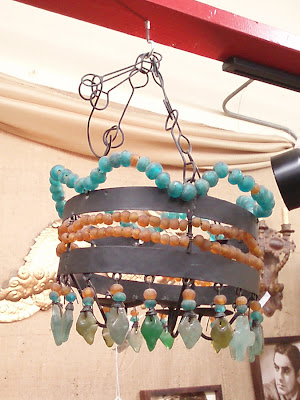 The drops at the bottom look like bits of sea glass. Cast iron body with small disc shelves around the interior as candle holders. Glass beads at top. I like its naive yet sophisticated look. Solana Beach.
The drops at the bottom look like bits of sea glass. Cast iron body with small disc shelves around the interior as candle holders. Glass beads at top. I like its naive yet sophisticated look. Solana Beach.
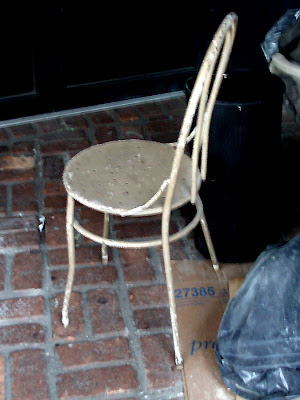
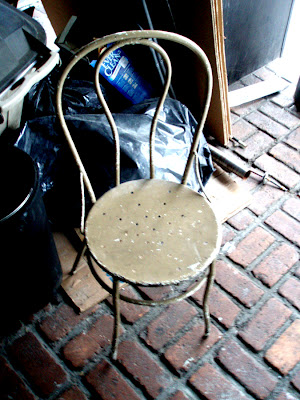
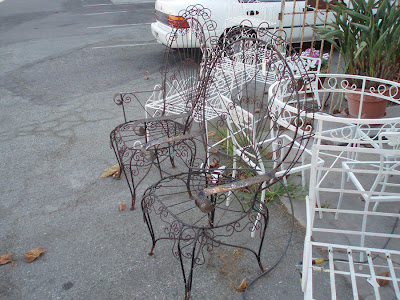
The taupe colored chair I came across on the Bowery. It was sitting in the doorway of a lighting store. I couldn’t decide if it was being thrown out or if it was waiting to be pulled out in the morning for someone to sit–but I took the photo for future inspriation. It’s a pared down version of the french type. The second, fanciful Victorian–scallop inspired back, I can see on a patio under a canopy of bougainvillea in San Juan Capistrano, with me sipping on a Pimm’s Cup waiting for summer.
If you happen to find yourself in NYC go to the Bowery Hotel. The bar off the lobby–one is transported to San Simeon, Hearst Castle, in all it’s antediluvian splendor–the cocktail waitress told us, used to be a gas station.
The taupe colored chair I came across on the Bowery. It was sitting in the doorway of a lighting store. I couldn’t decide if it was being thrown out or if it was waiting to be pulled out in the morning for someone to sit–but I took the photo for future inspriation. It’s a pared down version of the french type. The second, fanciful Victorian–scallop inspired back, I can see on a patio under a canopy of bougainvillea in San Juan Capistrano, with me sipping on a Pimm’s Cup waiting for summer.
If you happen to find yourself in NYC go to the Bowery Hotel. The bar off the lobby–one is transported to San Simeon, Hearst Castle, in all it’s antediluvian splendor–the cocktail waitress told us, used to be a gas station.
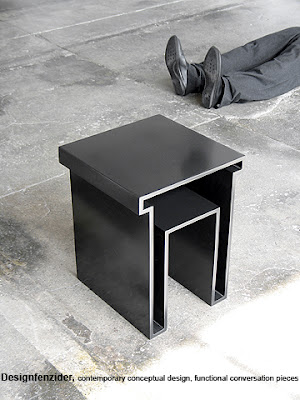
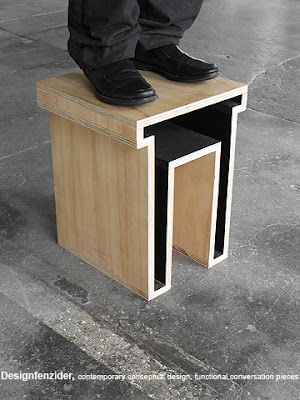
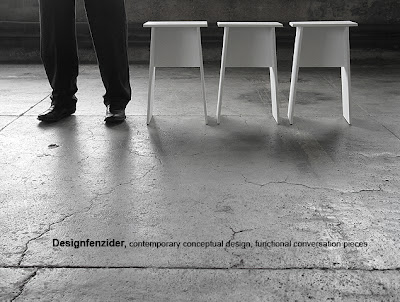


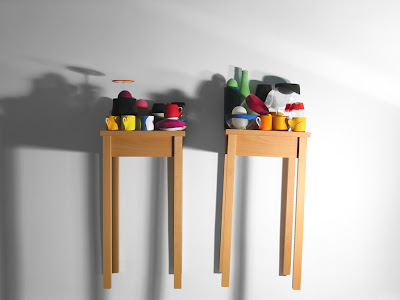
I like the immediacy and the continuity of narrative that happens when I capture an image and then post it. However, I had wanted to make a visit to Designfenzider’s studio before I left NYC, and wasn’t able to make it so they kindly sent me images of some of their work.
They illustrate a specific point of view of the everyday object. The Candlestick Maker transforms the function of an object to make itself functional.
My favorite are the Still Life Frames (check out their website). Framing something in itself is the act of creating. One clarifies and composes a world into a self contained area. Framing something says that the thing inside of this defined space is different from that which is outside of it.

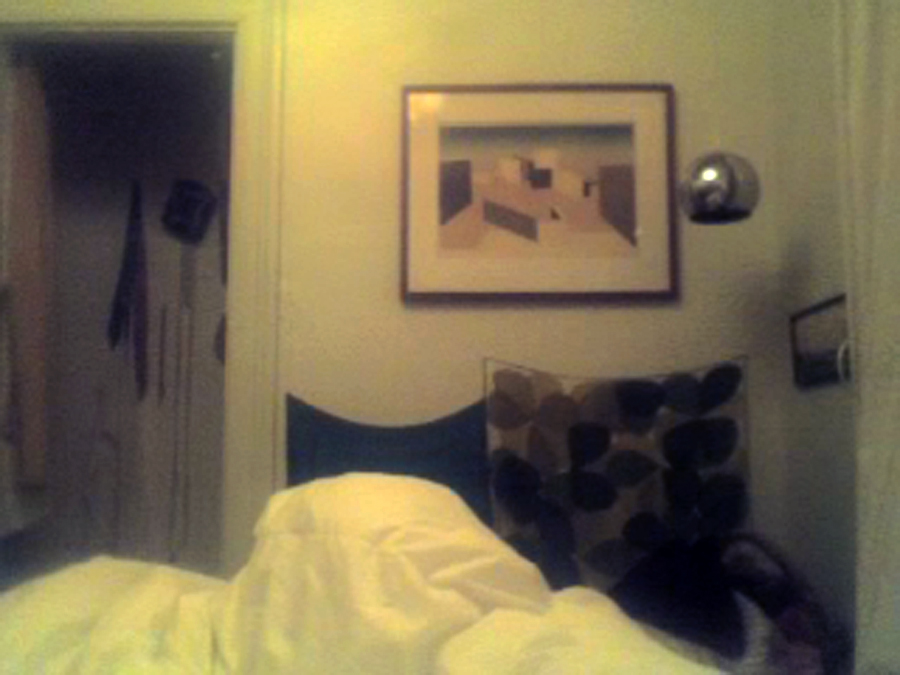
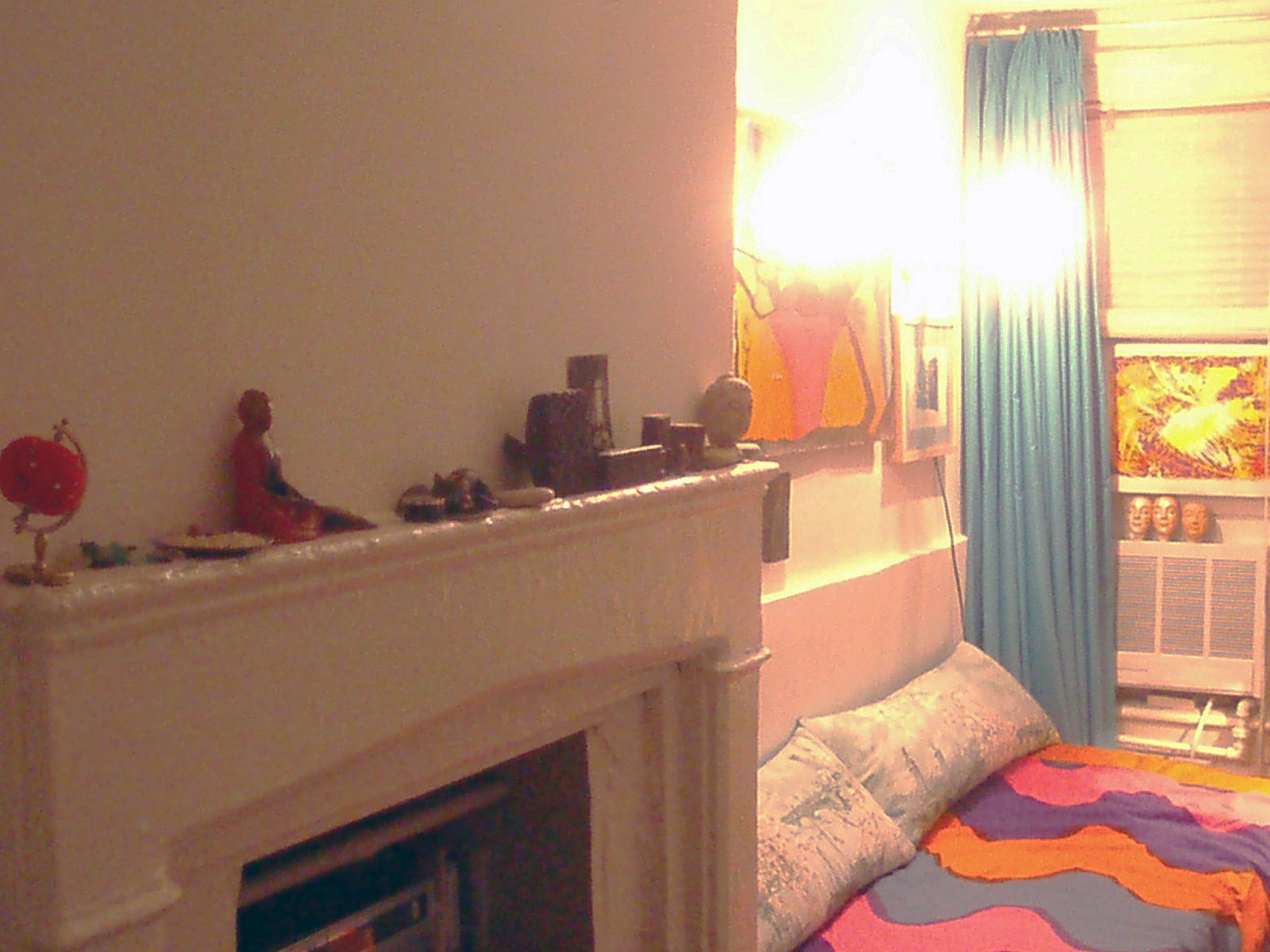
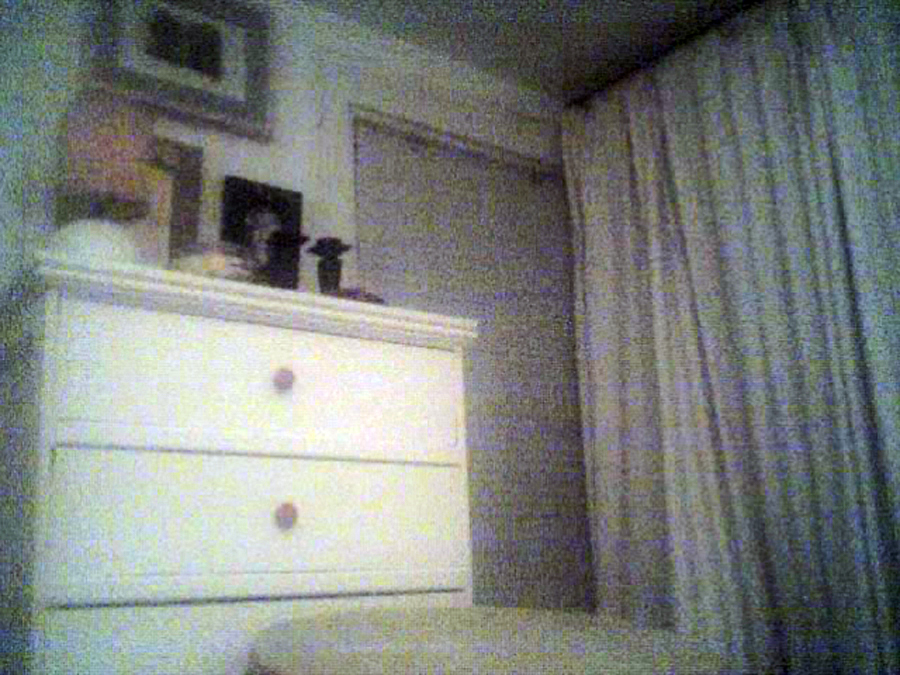

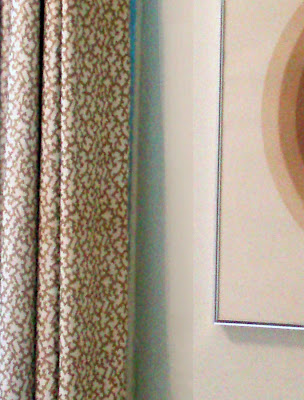
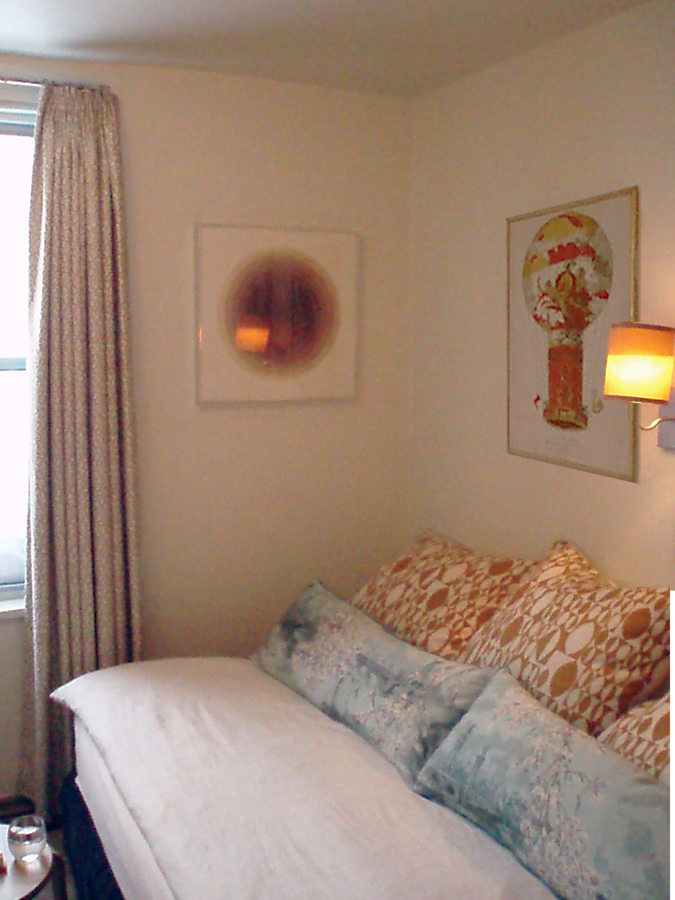
People have been asking me, why did you leave NY, why did you move here? I understand their questioning, but like to ignore it. As Elsie de Wolfe would embroider on her pillows, Never Complain Never Explain.
This used to be my 225 square foot apartment that I had for 4 years in East Williamsburg, Brooklyn. The shower was behind a curtain in the main room, the WC was off the bedroom. There was a skylight in the WC (I ripped down the ceiling to find it having noticed light coming through a vent there) and since it was a rear house there was nice light. The biggest thing in the apartment when I moved in was the refrigerator, which I had taken out and replaced with an under counter version.
Once a friend from L.A. came to call and said upon entering, “So Dear, this is what 650.00 gets you in Williamsburg these days?”
The pictures are at different stages of when I lived there from an abstracted vermicelli chintz in tone on tone beige; to a plain turquoise chintz; to a vintage abstracted gold printed vermicelli fabric as a curtain with a turquoise chintz liner that in the morning when waking would outline the window in glowing turquoise haze.
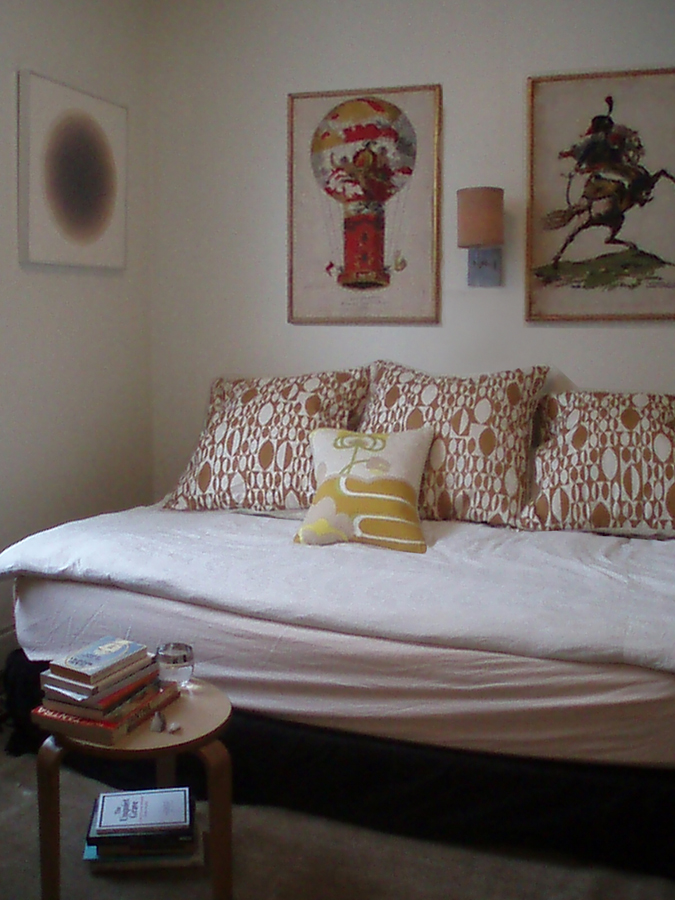
There are Vera scarfs pinned to the wall in the bedroom; the pendent light was vintage chrome that I rewired (thrift store, CT) and my Lurcat litho purchased at a flea market in Florida. The little landscape is Christin Rodin taken with a Diane camera. The Marimekko panel on the daybed is vintage, (ebay) the daybed is as well, bought down the street on the corner from a local who would open up his semi-storage container and sell old bikes and bits and pieces of furniture picked up in Pennsylvania. The table top I designed and had made walnut veneer pie-cut top on an Eames base. The chairs steel vintage redone in a Christopher Farr Cloth.
The images, mostly taken late at night with a camera phone, may leave Anonymous aghast, indeed.